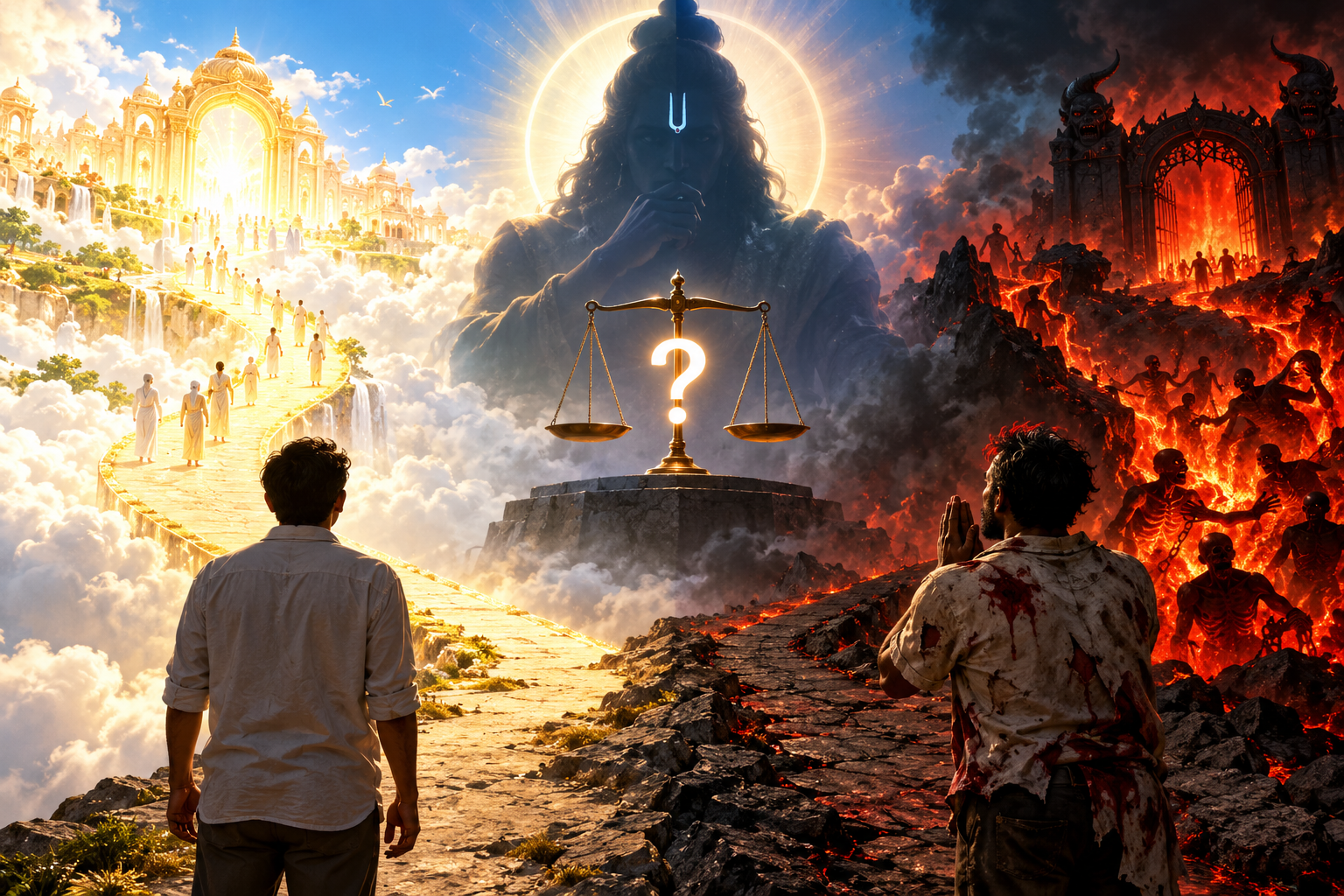
Almost every religion propagates the concept of hell and heaven. And everybody knows the facilities available there. In heaven, you enjoy the pleasures, and in hell, you suffer, all because of your karmas.
If you have done good acts, you will be rewarded, and if you have done bad acts, you will be punished. This is how we understand the concept of heaven and hell.
But have we ever thought about whether this system makes any sense?
I don’t know about other religions, but in Hinduism, there is a belief that if somebody who may have committed numerous evil acts pronounces the name of God, like Vishnu or one of his avatars, at the time of death, he may achieve salvation. That is, he becomes free from the cycle of birth and death.
Now, think about this. A person may spend his entire life committing crimes, killing innocent people, and causing suffering to others. But if he remembers God at the time of his death, he may achieve the ultimate thing that a person can achieve according to this belief: moksha.
On the other hand, somebody who has lived a comparatively ordinary life, committed a few mistakes, and caused much less harm may not achieve salvation simply because he was unable to remember God at the time of his death.
Does this make sense?
People may be very religious throughout their lives, but when their last breath comes, they may forget to take the name of God. Even their family members may forget to remind them. And there may be people who die suddenly without getting the opportunity to pronounce God’s name.
So, does it mean that the ultimate outcome of our lives can depend on what we say in our last moments?
We spend our entire lives talking about karma, good deeds, bad deeds, heaven, and hell. We tell people that they should do good things and avoid bad things because their actions have consequences. But if somebody can escape the consequences of his actions simply by remembering God at the time of death, then what is the point of this entire system?
Let us think about it from the perspective of a common man, using common sense.
Imagine You Are God
Imagine you are the creator of this universe. You have ultimate power and everything. You know what everybody has done, and you know the consequences of their actions.
Now, as we understand it, God is somebody who has no desires, no ego, and no need for anything. God is supposed to be beyond the weaknesses that human beings have.
Now, two people have died.
Both have done bad things in their lives. One of them has committed numerous crimes, killed innocent people, and destroyed families. His actions have caused immense suffering to people who did nothing wrong.
The other person has committed comparatively minor wrongs. Sometimes he has lied, sometimes he has done something selfish, and sometimes he may have hurt somebody. But the scale of his actions is nowhere near that of the criminal.
Now, both have died, and according to the concept of karma, both should face the consequences of their actions.
But something happens.
The criminal person, while taking his last breath, pronounces your name. He remembers you at the very moment when his life is about to end.
The other person, however, is unable to pronounce your name, because he couldn’t remember.
Would you grant salvation to the criminal simply because he remembered your name? Would you free him from the cycle of birth and death while the other person has to face the consequences of his actions?
If you do that, then what kind of justice is this?
The criminal has killed innocent people. He has destroyed families. He has caused suffering that may continue even after his death. The people he killed will not come back to life just because he remembered God. Their families will not suddenly stop grieving. The consequences of his actions will not disappear.
Yet, according to this interpretation, he may receive salvation because he remembered your name.
And the other person, who has done comparatively fewer bad things, may not receive the same outcome.
Why?
What is the logic behind this?
If both people are to be judged according to their karmas, then their actions should matter. If the consequences of their actions are different, then the consequences should reflect that difference.
But if remembering your name becomes more important than the actions they performed throughout their lives, then are we really talking about karma anymore?
Or are we saying that a person’s relationship with God can become more important than the harm he has caused to other human beings?
Does God Have an Ego?
Now, let us look at this from another perspective.
If you are granting salvation to the criminal because he pronounced your name, then isn’t it possible to ask whether you are doing it because he remembered you?
You can say to the other person, “Look, he remembered my name, so I granted him salvation.”
But why should that matter to God?
If God has no ego, then why would he care whether somebody remembers his name or not?
If God has no desires, then what does he gain when a human being pronounces his name?
A human being may feel happy when somebody remembers him. A human being may feel proud when somebody praises him. A human being may want recognition from others.
But we are human beings. We have egos, desires, and expectations.
When we talk about God, we talk about someone who is beyond these things.
So, if God grants salvation to somebody because that person remembered his name, then how is this consistent with the idea that God has no ego?
If remembering God’s name is enough to earn salvation, then it begins to look as though God is rewarding people for remembering him.
And if God is rewarding people because they remember him, then what makes this different from a human being who rewards somebody for praising him?
The entire argument rests on the belief that God is beyond human weaknesses. But if we attribute actions to God that appear to arise from the same desire for recognition that human beings have, then are we not contradicting our own understanding of God?
If God has an ego, then he is not free from ego.
If God needs people to remember him, then why do we say that he has no desires?
And if God does not need anything from anybody, then why should the pronunciation of his name decide whether somebody achieves salvation?
If God is truly beyond these things, then I find it difficult to understand why merely remembering his name should become a reason for granting the ultimate reward.
Why Should a Criminal Get Salvation?
Now, somebody may say that God is merciful and can forgive anybody.
But let us think about this.
Suppose a person has killed numerous innocent people. He has never regretted his actions. He has never cared about the suffering he has caused. Throughout his life, he has continued to commit crimes without any genuine remorse.
But when death comes, he remembers God.
And because he remembers God, he receives salvation.
What about the people he killed?
What about their families?
What about the suffering he caused?
Does their suffering become irrelevant because the criminal remembered God?
If a person can commit terrible crimes throughout his life and still achieve salvation simply by pronouncing God’s name at the last moment, then what message does this send?
Does it mean that the consequences of our actions are not as important as we think?
Does it mean that a person can spend his entire life doing evil things and still receive the ultimate reward, provided he remembers God at the right time?
If that is how the system works, then why should anybody be concerned about the consequences of their actions?
A person could simply say that he will remember God before dying and achieve salvation.
Of course, we cannot know whether anybody can deliberately plan to do this and actually achieve salvation, because remembering god’s name at the final moments is very rare. But the logical question remains: if merely pronouncing God’s name is sufficient, then what prevents the concept from being interpreted this way?
Because in the story of Ajamil also, there is mention that he says the name of his son ‘Narayan’, but Lord Vishnu’s parshads come to take him to the salvation.
A criminal may remember God because he is afraid of punishment. That does not automatically mean he regrets killing innocent people. It does not mean that he has suddenly become a better person. It does not mean that he understands the suffering he has caused.
So why should the act of remembering God, by itself, be more important than everything else he has done?
What Is the Point of Karma, Then?
We often hear that everything happens according to karma. We are told that our actions have consequences and that nobody can escape the results of their deeds.
But if salvation can be achieved simply by remembering God at the time of death, then what happens to this principle?
Suppose a person spends his entire life doing good things. He helps others, avoids harming people, and tries to live honestly. But at the time of death, he is unable to pronounce God’s name.
And suppose another person spends his life doing terrible things but remembers God at the last moment.
If the second person achieves salvation while the first person does not, then what exactly are we rewarding?
Are we rewarding good deeds, or are we rewarding the remembrance of God?
If good deeds matter, then why should the criminal be able to bypass their consequences?
If remembering God matters more than good deeds, then why do we spend so much time talking about karma?
And if both matter, then how are they weighed against each other?
These are basic questions. We do not need to be scholars to ask them.
If a system claims that actions have consequences, then we should be able to question an interpretation that allows those consequences to be bypassed by a single act at the end of life.
Otherwise, the concept of karma begins to lose its meaning.
If God Is Just, Then Why Does This Make Sense?
Whenever we talk about God, we often describe him as the ultimate source of justice. We believe that God knows everything, understands everything, and judges everybody fairly.
But if God already knows what a person has done throughout his life, then why should the person’s final words become so important?
God would already know whether that person had killed innocent people. God would already know whether that person had helped others. God would already know whether that person had genuinely regretted his actions or was simply afraid of what would happen after death.
Then why should the pronunciation of God’s name become decisive?
If God knows everything, he does not need a final declaration to discover what kind of person somebody is.
If God is just, he should already know the difference between a criminal and an ordinary person.
And if God has no ego, he should not need somebody to remember his name.
So, why does this interpretation of salvation appear to place so much importance on that one moment?
A human court examines evidence, the nature of a crime, and the circumstances surrounding it. Human justice is imperfect, and it often fails. But the very idea of justice requires us to distinguish between different actions and their consequences.
If we imagine a God who knows everything and has ultimate power, then why would his justice depend on something as limited as whether a person managed to pronounce his name before dying?
Shouldn’t an all-knowing God already know everything that needs to be known?
And shouldn’t a God without ego have no need for recognition?
If these qualities are what make God different from human beings, then why do some interpretations of divine justice appear to contradict them?
Hell and Heaven: What Should Their Purpose Be?
Now, let us come back to the concept of heaven and hell.
If heaven is a place where people enjoy the rewards of their good deeds, and hell is a place where they suffer for their bad deeds, then there should be some relationship between their actions and what happens to them.
Otherwise, why have this system at all?
If a person who has committed numerous crimes can achieve salvation simply by remembering God, while another person who has done comparatively little harm cannot, then what is the purpose of judging people according to their karmas?
If the ultimate outcome is decided by whether somebody remembers God at the time of death, then perhaps we have given too much importance to that moment and too little importance to the life that came before it.
A person’s entire life consists of thousands of decisions. He chooses how to treat other people, whether to help or harm them, whether to tell the truth or lie, and whether to care about the suffering of others.
These decisions affect real people. They can change lives, destroy families, and cause suffering that lasts for years.
But a person’s final words last only a moment.
So why should that moment outweigh everything else?
If there is a system of justice after death, then I would expect the actions of a person to matter. I would expect the difference between causing immense suffering and making ordinary mistakes to matter.
And if remembering God is also important, then there should be a reason why it matters that does not simply contradict the idea that God has no ego.
Otherwise, the concepts of karma, heaven, hell, and salvation appear to be working against one another.
And That’s Why I Question the Concept of Heaven and Hell
And that’s why I think there should not be any heaven or hell.
And if there is, then their laws should work with a common sense.
If God has no ego, then he should not need people to remember his name.
If our actions have consequences, then those consequences should matter.
If a person has committed numerous crimes, then merely pronouncing God’s name should not make the suffering he has caused irrelevant.
And if another person has done comparatively fewer bad things but is unable to remember God at the time of death, then why should that inability become more important than the life he has lived?
What kind of justice would that be?
We often say that God is beyond human understanding. But if we use this argument to explain every contradiction, then we can justify almost anything. We can say that something is right even when it appears wrong, simply because we do not understand God’s ways.
But then, what is the point of using words like justice, mercy, and goodness to describe God if we cannot question what these words mean when applied to him?
If God is beyond ego, then he should be beyond the need for recognition.
If God is the ultimate embodiment of justice, then the concept of justice should not become meaningless when we talk about salvation.
And if God is truly perfect, then why would he need to grant salvation to somebody merely because that person remembered his name?
I find it difficult to reconcile these ideas.
Perhaps heaven and hell exist. Perhaps they do not. But if they do exist, then I would expect their laws to make sense.
A criminal should not become innocent simply because he remembers God. The people he killed should not become less important because he remembered God. And a person who could not pronounce God’s name at the time of death should not automatically become less deserving of salvation simply because of that inability.
If our actions matter, then they should matter.
And if they do not matter, then why do we keep talking about karma?
That is the question I want to ask.
Hell and heaven may or may not exist. But a system that claims to be based on justice should be able to explain why justice does not disappear when somebody remembers God’s name.
And if God has no ego, then perhaps the first question we should ask is this:
Why would God care whether we remember his name at all?
READER RESPONSES
If this essay sparked a thought, share it.