
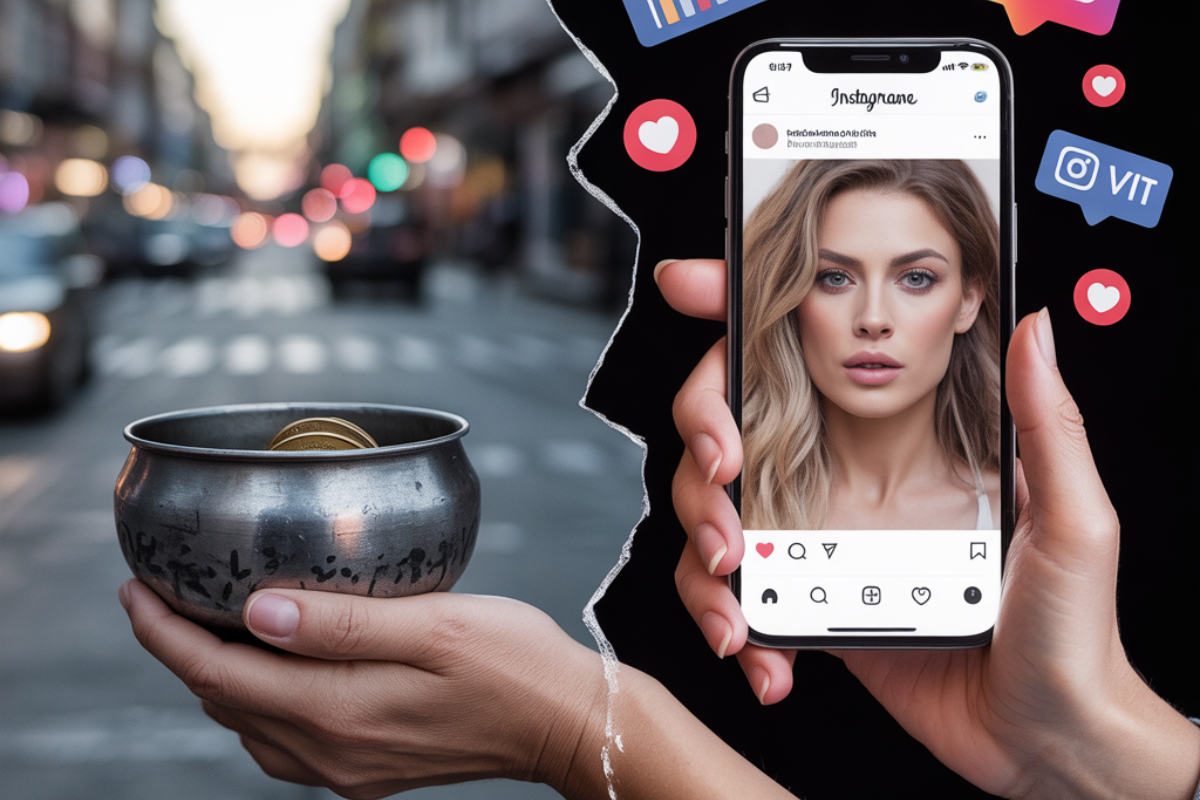
I was walking home when I encountered a female beggar on the street. She came to ask for money in her steel bowl. At that moment, a familiar thought crossed my mind. Most of the time, society responds to beggars with the same sentence: “Go and work somewhere, you are still young.”
Yet we all know the uncomfortable truth—there is no abundance of work available, especially for people living at the margins.
This led me to a disturbing thought. What if someone suggested that even female beggars create accounts on Instagram, Facebook, or similar platforms? After all, social media algorithms are highly favourable to certain types of content that go viral within hours. Thoughtful or meaningful content rarely achieves rapid visibility, while vulgar or provocative content spreads effortlessly.
This contrast exposes a troubling reality: digital platforms reward provocation far more consistently than merit.
For individuals already struggling for survival, dignity often stops being a choice. If such individuals were to engage in what can be called digital prostitution, they could earn far more without wandering the streets for spare change. In such conditions, survival replaces morality, and dignity becomes a privilege rather than a right.
To understand this, we must first define digital prostitution. Traditionally, prostitution refers to selling one’s body for money through physical use. Digital prostitution, however, does not involve physical contact. It operates entirely through the internet, using platforms and applications that monetise attention and visibility.
Digital prostitution is not limited to explicit nudity or direct sexual services. It includes a wide range of practices—such as deliberately posting erotic images online to gain followers, brand endorsements, or paid subscriptions. Platforms like Instagram even provide subscription features, where users often pay not for meaningful content, but for controlled sexual access.
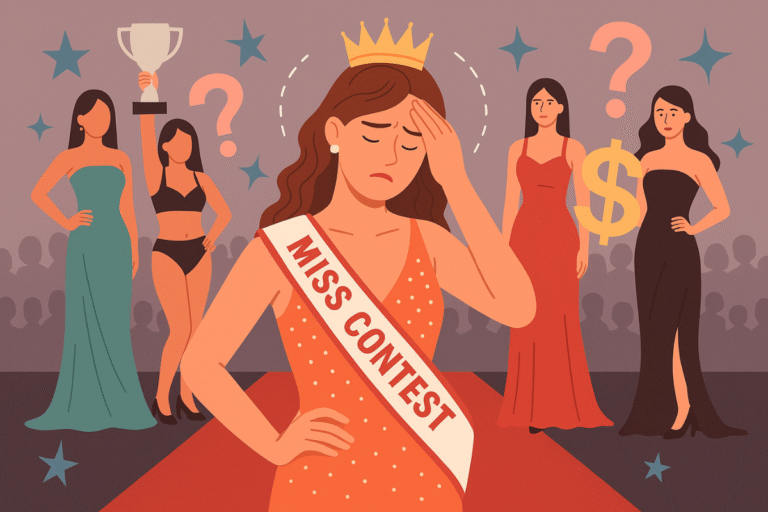
This phenomenon is not limited to social media. The entertainment industry reflects the same pattern. Observe any film launch event: male actors, even those portrayed half-clothed on screen, appear fully covered in formal attire, while female actors are frequently styled in revealing outfits. This is not accidental. It is driven by biology, psychology, and profit-oriented marketing strategies.
Digital prostitution also includes content created with the intent of monetising sexualised representation online. Item songs in films and erotic Instagram reels designed to lure viewership fall into this category. In this ecosystem, producers, promoters, and platforms act as facilitators, while individuals become participants within a system built around sexual monetisation.
Supporters often defend such content as artistic expression. But art does not require sexualisation to hold value. When sexualisation is inserted primarily to increase profits, expression transforms into commerce, and the human body becomes a commodity. Many filmmakers openly admit that adding item songs boosts viewership, even if it compromises artistic integrity or moral considerations.
Those who control this ecosystem do not restrain it—they actively promote it. Imagine if, from the beginning of the digital entertainment era, content built on sexualisation had never been prioritised. Audiences would have been conditioned to value acting, storytelling, and originality over visual provocation.
Good content still exists today, but it has become increasingly rare. Even when created, it remains buried, because algorithms do not understand morality, dignity, or art. They understand retention, engagement, and profit. Content that aligns with algorithmic incentives thrives, while the rest quietly disappears.
What is the way forward then?
The most important thing which we can do is not idolising the promoters or participants of this type of content. Because it is one of the main factors which leads to this type of content to be created by others. The clothes which actresses wear in the films become fashion, and the type of act they do, becomes benchmark for others to follow. When the reference is bad, then the product will be bad only. Isn’t?
The stake is on people, what they value as individual and as society, will shape the future of this digital prostitution world.

You’re absolutely right, but in today’s generation these things have spread very fast. It’s very hard to control them, and stopping them is impossibl
Quite right