A reflection on VIP culture, power worship, and why questioning authority feels uncomfortable in India.
We love to call ourselves a democracy.
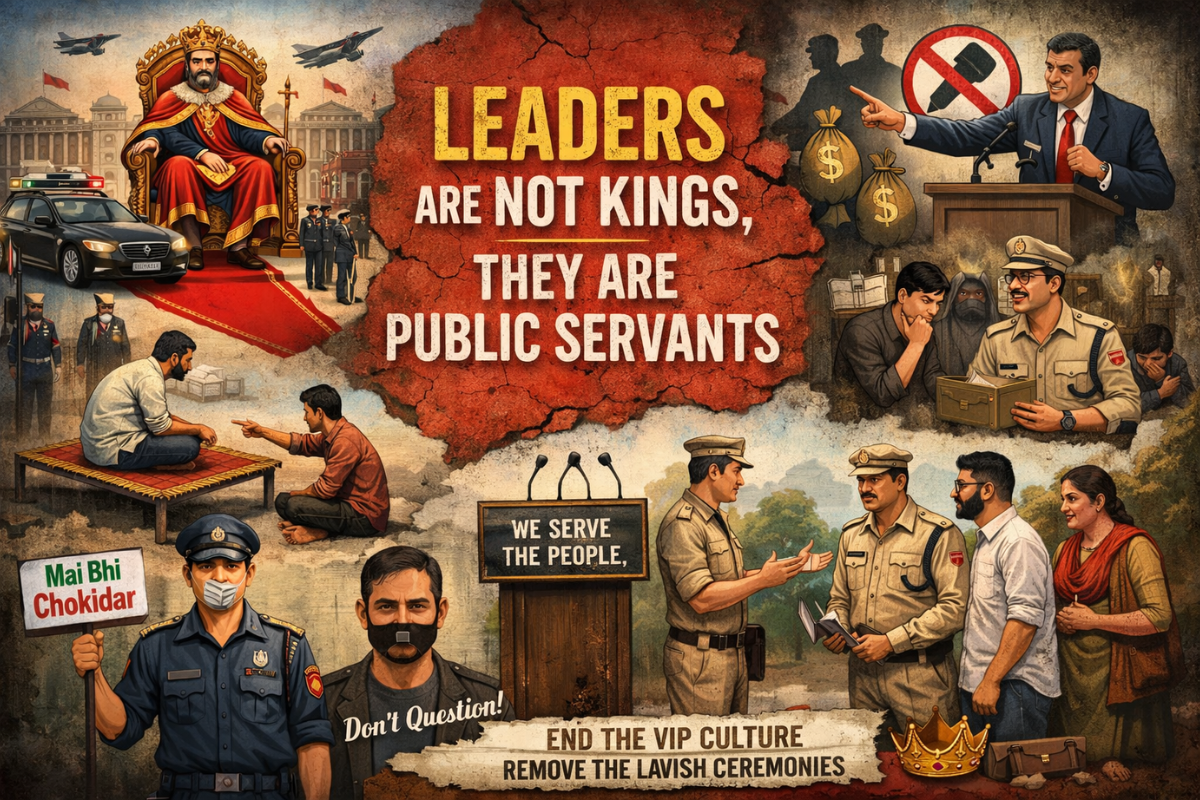
But the moment a leader arrives, roads are blocked, red carpets are rolled out, and questions disappear.
Somewhere between voting day and victory day, we forget who is supposed to serve whom.
Did this thought ever strike your mind — why do Presidents, Prime Ministers, and other top-level people receive so much public respect? Why does a President always walk on a red carpet? Why are senior officers called “dignitaries”? The word dignitary means a person holding an important or influential position. But in a democracy, how did importance slowly turn into superiority?
In a democracy, we elect our leaders so that they work for us. That is the basic idea. I am not saying they don’t work, but the way they treat themselves tells a lot. Many times, leaders behave as if doing their duty is a personal favour to the public. A small work, which was already their responsibility, is projected like a great sacrifice. You may have seen people praising their political leaders as if they are god and by doing even a small thing which was their duty or obligation to do as if they have done a favour on us.
In older times, there were kings and monarchies. They treated themselves above the people because they were not elected by the people and were taking the positions by fighting some other monarchies or inheriting power. There they by virtue of being the ruler of the country used to allocate money for show-off and to show their power. They spent huge amounts of money on show, ceremonies, and luxury to display their power and satisfy their ego. They were monarchies so we can’t say anything about them, as there was no freedom of speech back then.
But today we live in a democracy. Then why does the same culture continue?
Even now, we use terms like “State Honour” and “State Respect” without questioning them. A lot of public money is spent on just one visit of a President, Prime Minister, or Chief Minister. Security is necessary, no doubt. Everyone has the right to safety. But the unnecessary show, luxury, and ceremonies are not about security — they are about ego and image. These things slowly make leaders feel like they are kings.
The real problem is not only the leaders. It is also the mindset of the people. Many voters feel they are nothing in front of their elected representatives. Instead of leaders being afraid of public questioning, the public feels scared or hesitant to question them.
This mindset exists elsewhere too. In earlier times — and even today in many backward regions — people from scheduled castes and tribes treated themselves as untouchable. Some still refuse to sit on the same cot as someone from a so-called upper caste. This shows how deeply submission can enter the mind. No one is forcing them in that moment — they have accepted it internally. The same psychology works in politics. People themselves place leaders on a pedestal.
We say we want our leaders to answer us. But how will that happen if we treat them like gods or bosses? When you worship someone, you stop questioning them. This is why accountability disappears. Press conferences become rare. The media slowly comes under political influence. When questions stop, silence becomes normal.
Remember, years back many people putting status “Mai bhi chokidar”? They were doing this because a political leader had used that term for himself. People proudly embraced it. But think logically–you do understand what chokidar means? If you have hired a chokidar you don’t give him red carpets, do you? You ask him questions if something happens to your house or society, don’t you? And he answers it and protects your house because he knows that if he fails then his job will be lost and no one else will also hire him if they get to know about his past failures. You hold him accountable not give red carpets.
But in politics, does this fear of accountability exist? Leaders accused of serious crimes still win elections. Victims are questioned, witnesses are threatened, and yet power remains untouched. Why? Because leaders are seen as messiahs who act out of kindness, not duty. One popular decision makes people forget everything else. Information is controlled, uncomfortable news is buried, and the majority believes everything is fine — just like a society that never hears about crimes happening inside its own houses. It’s like the chokidar in your society portraying as if he has saved the society from thieves, but as he has got much powers where the president of RWAs are nothing in front of the one guard who is the head there, he silences the voices of people and doesn’t let the media highlight the murder which took place in one of the houses. So, the majority feel that the guard is doing good job as they are not able to access the news of murder or burglary in their neighbourhood. Many a times, they even try to shame the victim by saying why didn’t you closed the gate of your room. Thieves will steal, murderers will murder, it’s you who should be protecting yourself.
The privileges attached to high offices strengthen this behaviour. Posts like District Magistrate and Superintendent of Police enjoy such obedience that many officers start behaving like rulers instead of public servants. The uniform, power, and treatment they receive create an image that they are bosses, not employees of the public. You can’t expect them to answer you unless you don’t tell them that they are not the bosses, rather public is the boss.
I am not saying that state honours or security should not exist. Security is essential. But the unnecessary glamour, titles, and ceremonies should be reduced. These are the things that make leaders forget their real role.
Leaders are not kings. They are servants of the public. Until we stop treating them like rulers and start treating them like accountable employees, nothing will change. Democracy does not die only because of bad leaders — it weakens because people stop questioning power.