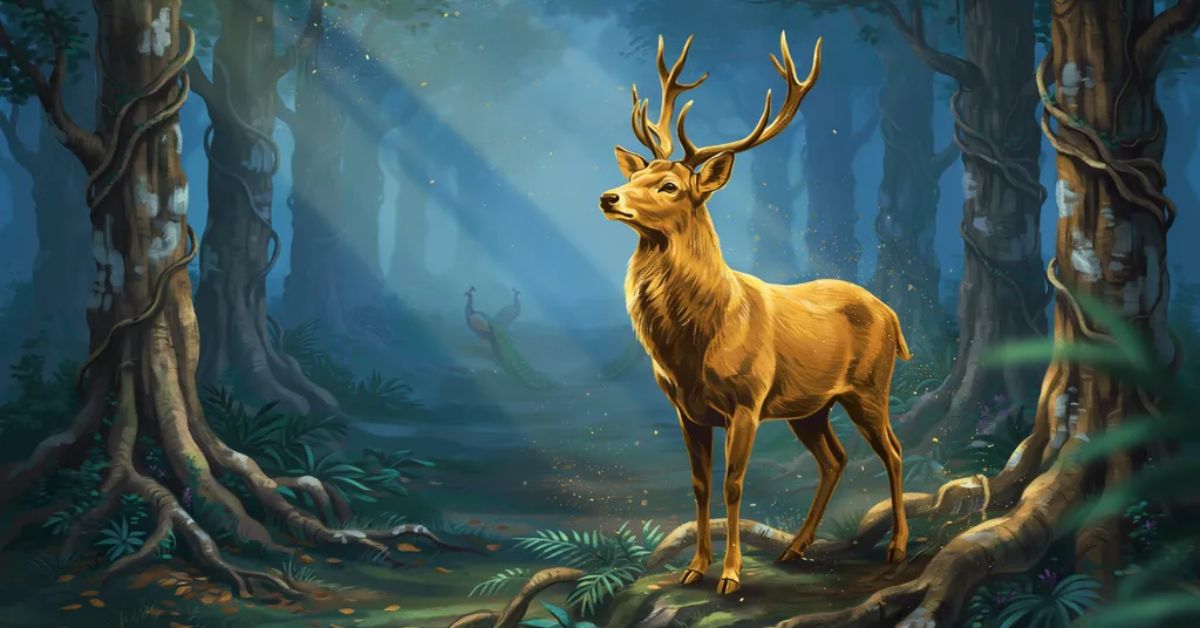
Many of us may have read or heard the story of Mama Marich.
Mama Marich was the maternal uncle of the Demon King Ravana of Lanka. The story goes like this — when Ram killed Khar and Dushan in the Dandakaranya Forest, Shurpanakha went to Ravana to avenge her humiliation. Ravana then went to Mama Marich and asked him to lure Ram deep into the forest by taking the form of a golden deer. When Marich refused, Ravana threatened to kill him. Left with no choice, Marich took the form of the deer — and we know the rest of the story.
Now many of us may have thought, why did Marich even agree? He could have just said no and let Ravana kill him. At least his hands would have been clean. Or he could have agreed in front of Ravana, but secretly warned Ram about the whole plan.
But it is not that simple. Think about it. In a forest full of demons and illusions, why would Ram believe a demon who is walking up to him and saying “hey, Ravana sent me to trap you”? There is no reason for Ram to trust him. And even if Marich tried to go against Ravana, Ravana could have him killed anytime, anywhere. He had no real escape.
So Marich had no options. Zero. He knew he was going to die — the only question was at whose hands. If Ravana killed him, his afterlife would depend on his overall deeds, could go either way. But if Ram killed him — Ram, who was the avatar of Lord Vishnu — then he would go to Vaikuntha for sure. So he made a choice. He played along with Ravana’s plan, knowing that by deceiving Ram he would get killed by Ram, and that was the best ending available to him.
Now think about this for a second. Marich had no power, no control over what was happening around him. But he still found one small thing he could control — the manner of his own death. Most people in his position would have just panicked. Marich thought it through and chose the best option from a very bad set of options. That is not a small thing.
There is a similar figure in the Mahabharata — Karna. Karna knew very well that the Kauravas were wrong. He was not a stupid man. But he stayed loyal to Duryodhana because Duryodhana had given him respect when the whole world rejected him. He fought on the wrong side, not because he didn’t know better, but because leaving felt like a worse betrayal. Just like Marich, Karna was not choosing between good and evil. He was choosing between two bad options and picking the one he could live — or die — with.
This is actually a much bigger question than just mythology. This happens in real life all the time. Think of someone who knows something wrong is happening at their workplace but stays quiet, because speaking up would cost them their job and their family would suffer. Or a person who goes along with something they are not fully okay with, just to protect something more important. These people are not villains. They are just stuck, like Marich was stuck. Doing the best they can with what they have.
Now coming to the philosophy of it — is it okay to pick the lesser evil? Some people would say no, wrong is wrong, you should never participate in it no matter what. But that is easy to say when you are not the one in the corner. In real life, when the pressure is on you, refusing to choose is also a choice — and usually the worst one, because then the most evil option wins by default.
This brings us to politics. We all say no political party is good, and honestly that is true. But if we don’t vote, or if we choose to stay neutral, we are not keeping our hands clean — we are just letting whoever is the worst option win without a fight. Marich understood this. He had no good option. But he picked the one that caused the least damage to himself and maybe, in a small way, gave his death some meaning.
The story of Marich is really a story about all of us — stuck between options we didn’t choose, trying to figure out which bad decision is the least bad. That is not weakness. That is just life.
READER RESPONSES
If this essay sparked a thought, share it.
satya ka sath dena sahi h ya apno ka????
Satya ka